VocabVillage


Overview
Learning a language is often perceived as challenging, with maintaining motivation being a key obstacle over the long journey of language learning. This app allows users to learn collaboratively, engage in friendly competition, and track their learning progress. By creating a supportive and interactive environment, the app aims to encourage users and enhance their engagement in learning new vocabularies
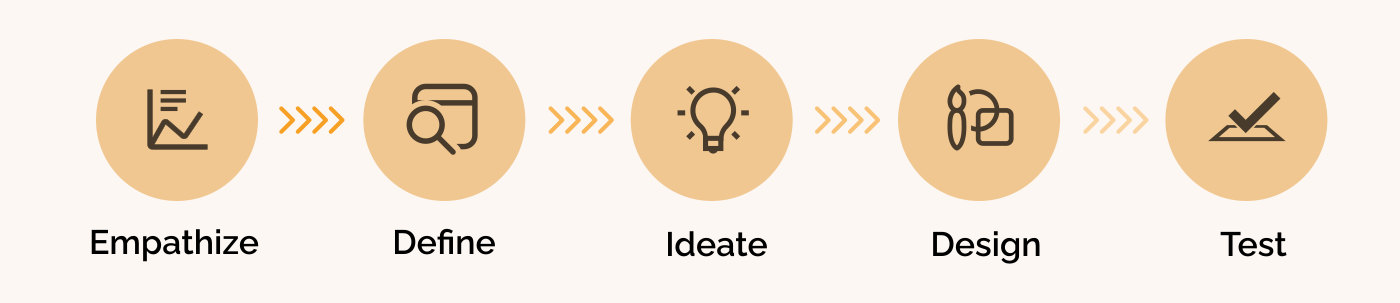
Design Thinking Process
01. Empathize
Competitor Analysis
In this section, I analyzed the strengths, weaknesses, target audience, and potential costs of competing apps in the market. This analysis provided valuable insights into how our app can differentiate itself and meet the unique needs of our target users effectively
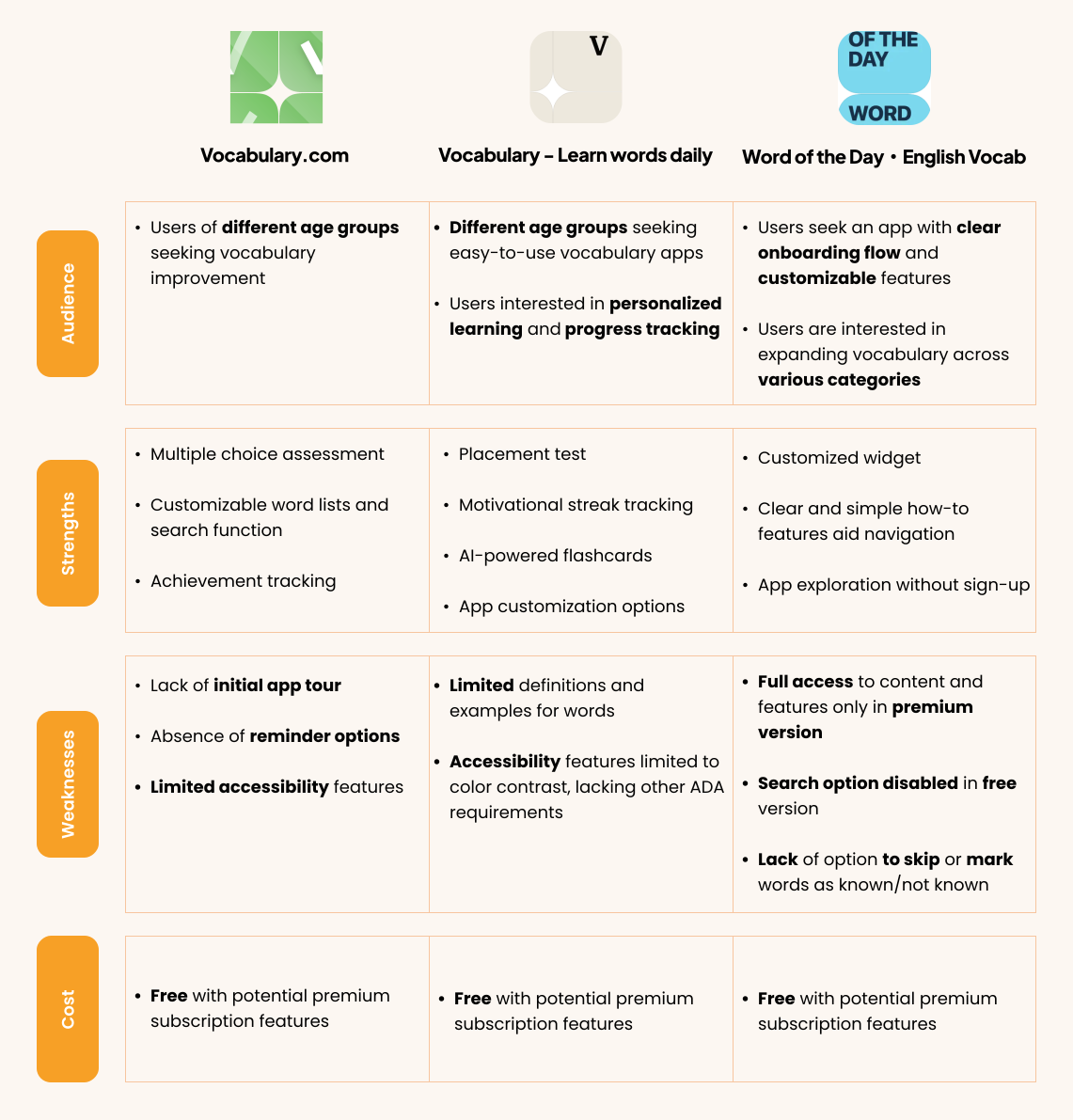
You can see the full Competitive Analysis here
User Research
After completing the competitive analysis, I conducted user research. The research aimed to understand the challenges users face in and gather insights into the features of vocabulary apps that users appreciate or dislike.Upon gathering the necessary data, I categorized the insights into three main categories: doing, thinking, and feeling
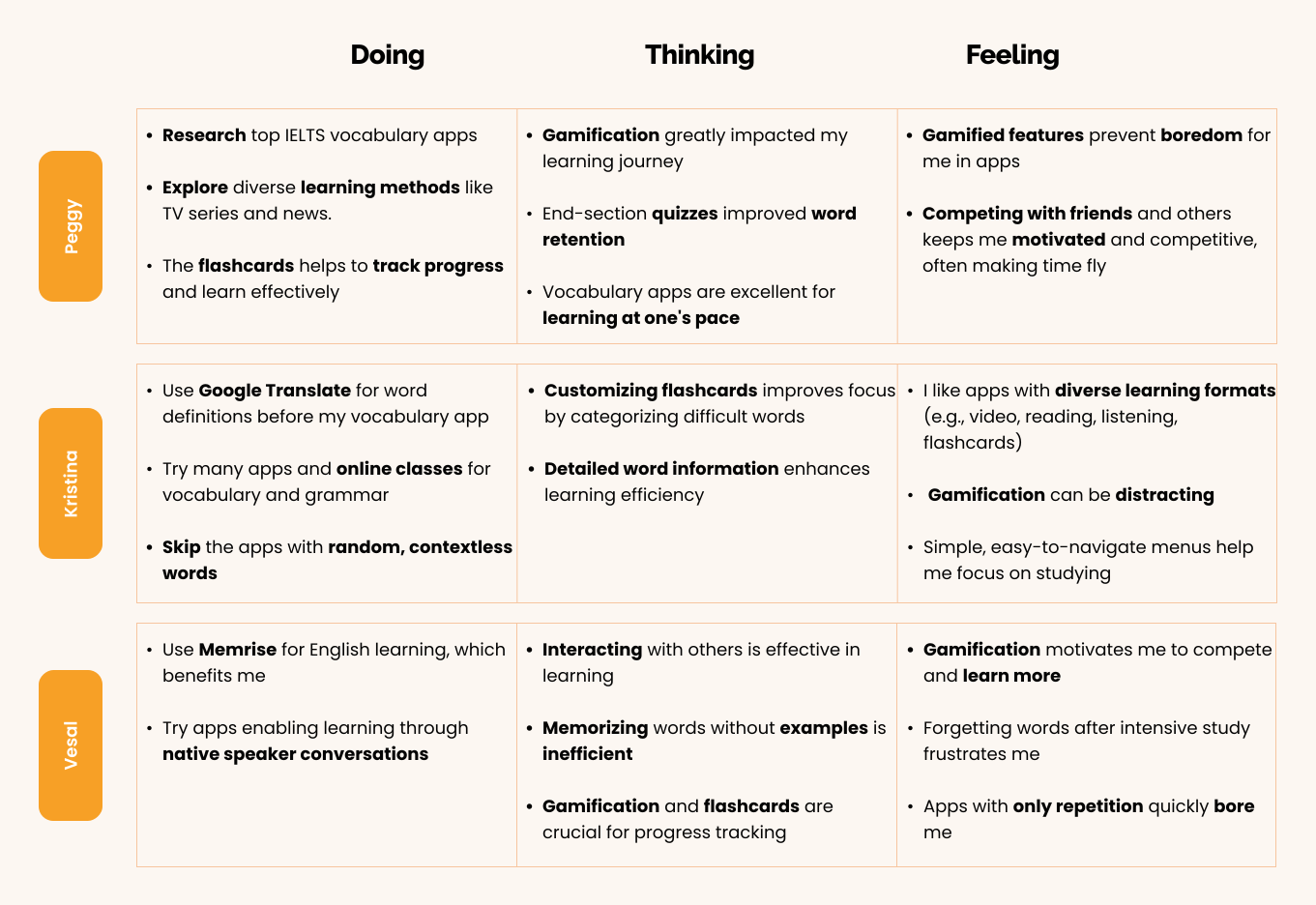
You can see the full User Research here
02. Define
User Persona
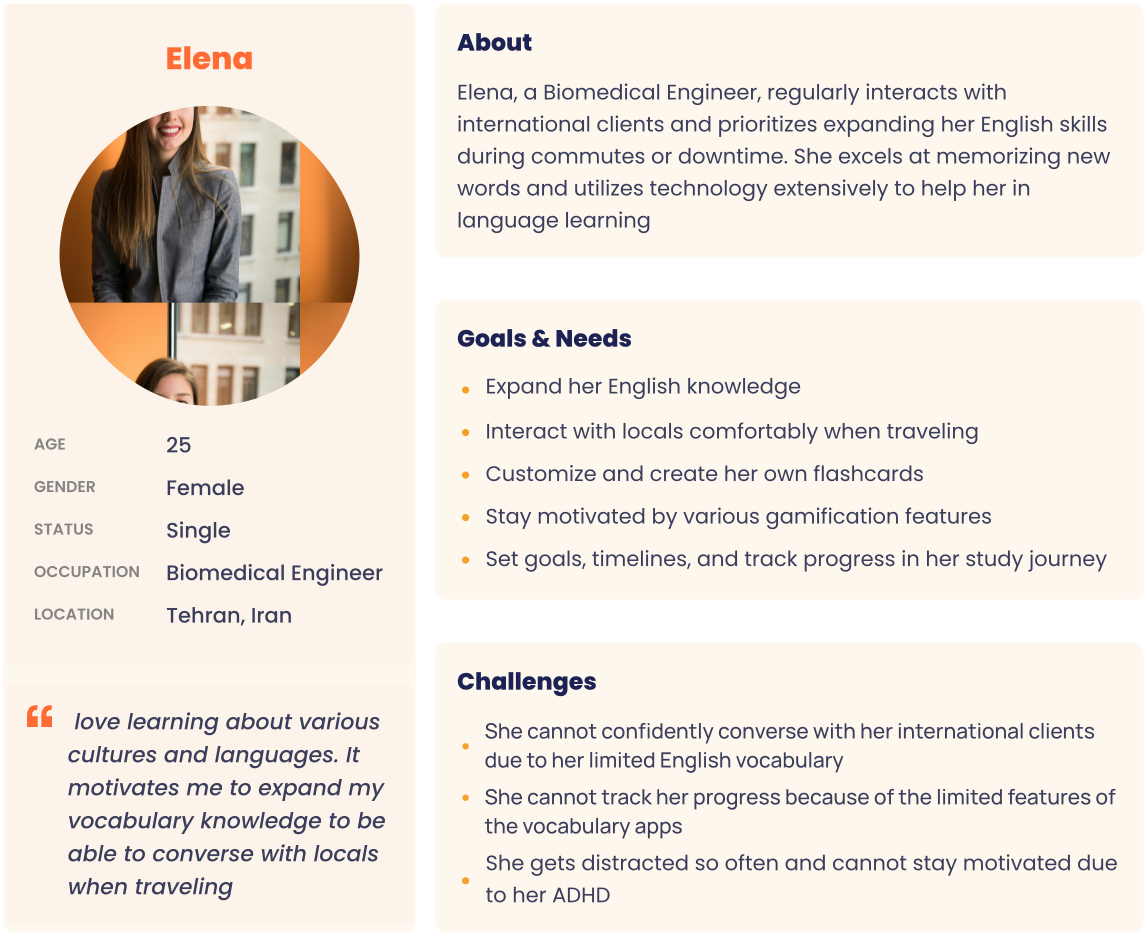
Problem Analysis
I conducted a problem analysis based on the user persona I developed, summarizing the identified issues and proposing a hypothetical solution
Problem Statement
Elena wants to improve her English skills efficiently and in a motivating way so that she can confidently interact with international clients at work and converse with locals during her travels
Hypothesis Statement
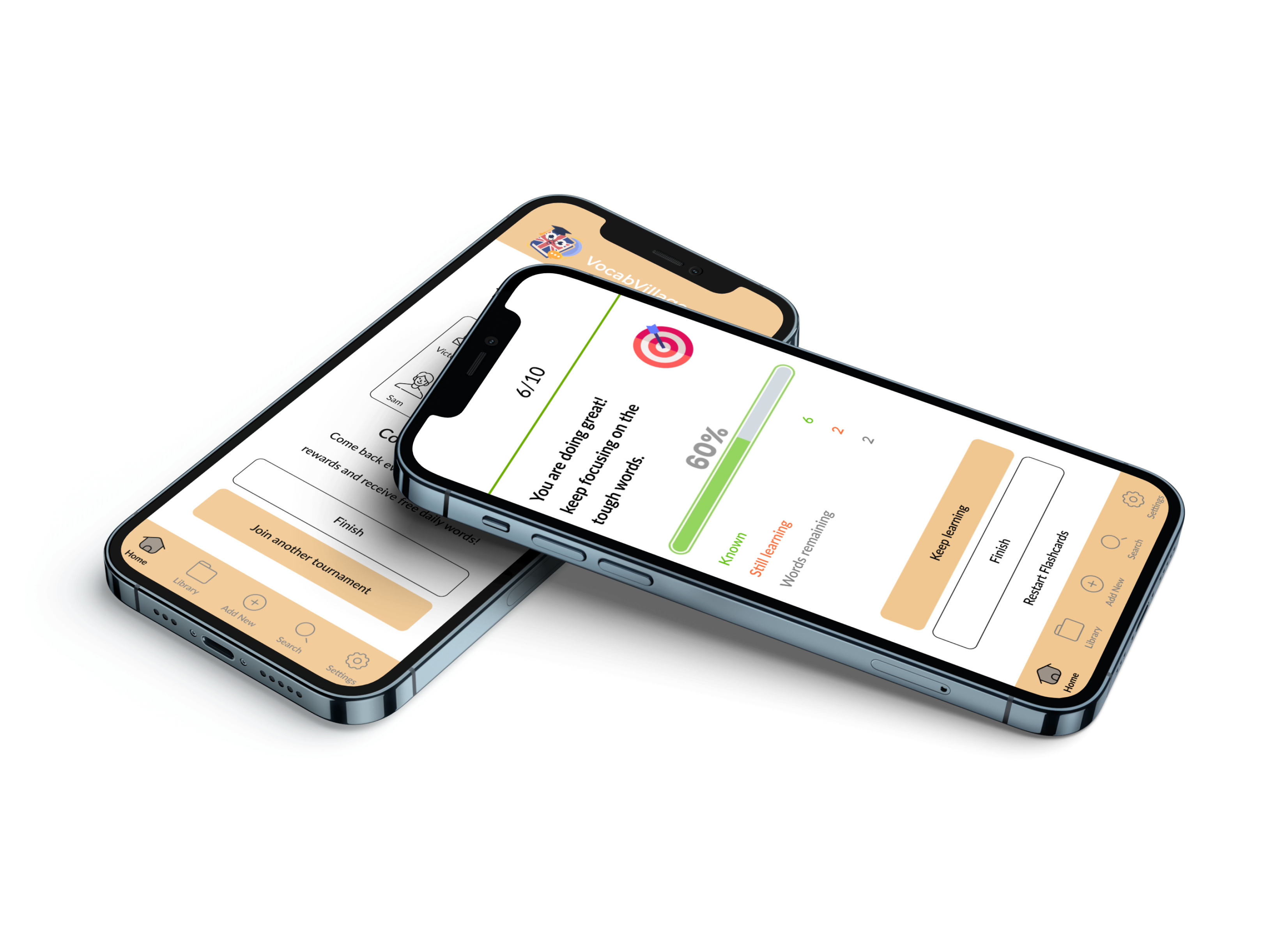
We believe that by implementing a customizable flashcard feature, a gamified learning experience, and the ability to create communities for interacting with other learners, Elena's language proficiency and confidence in conversing with native speakers in various situations will improve
03. Ideate
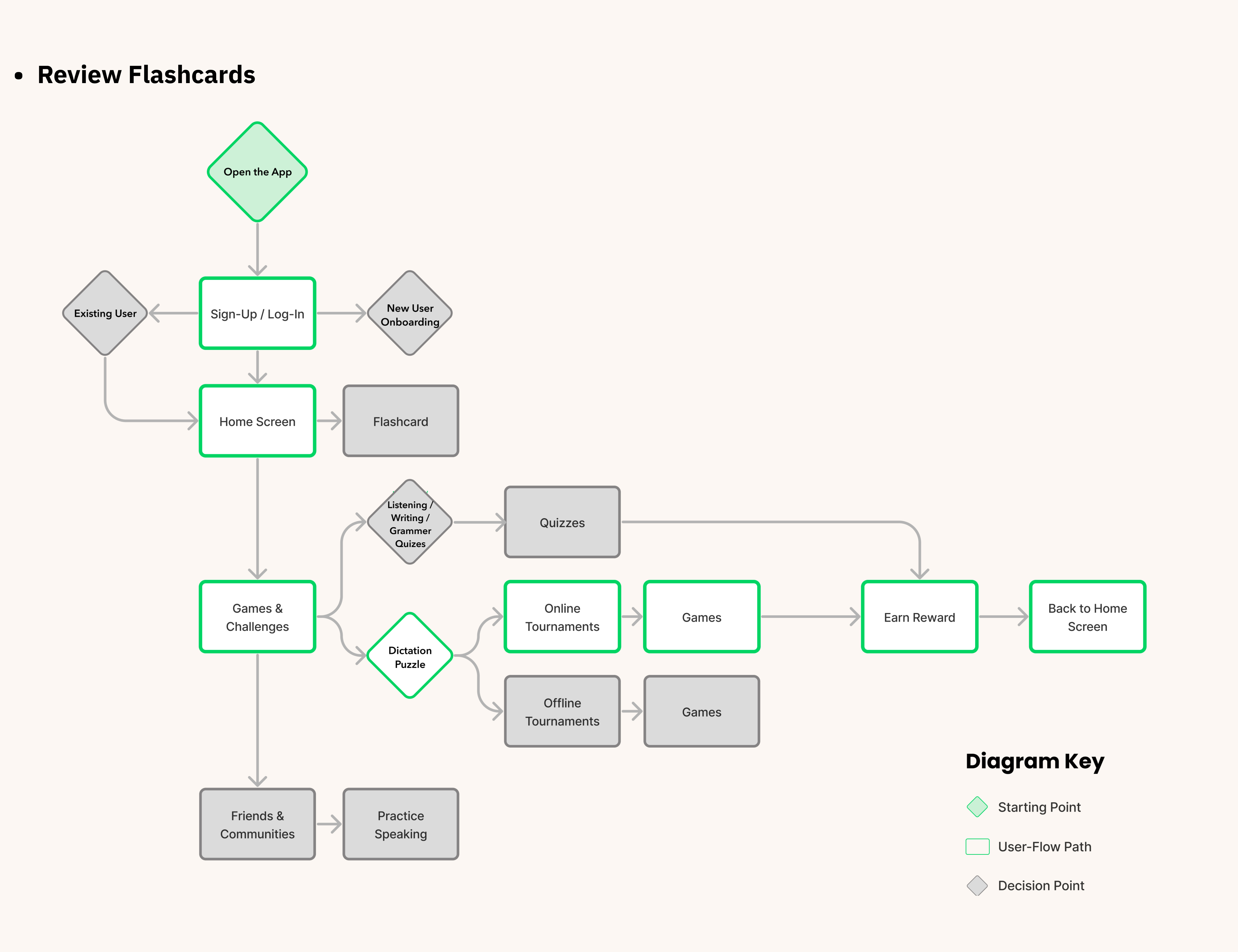
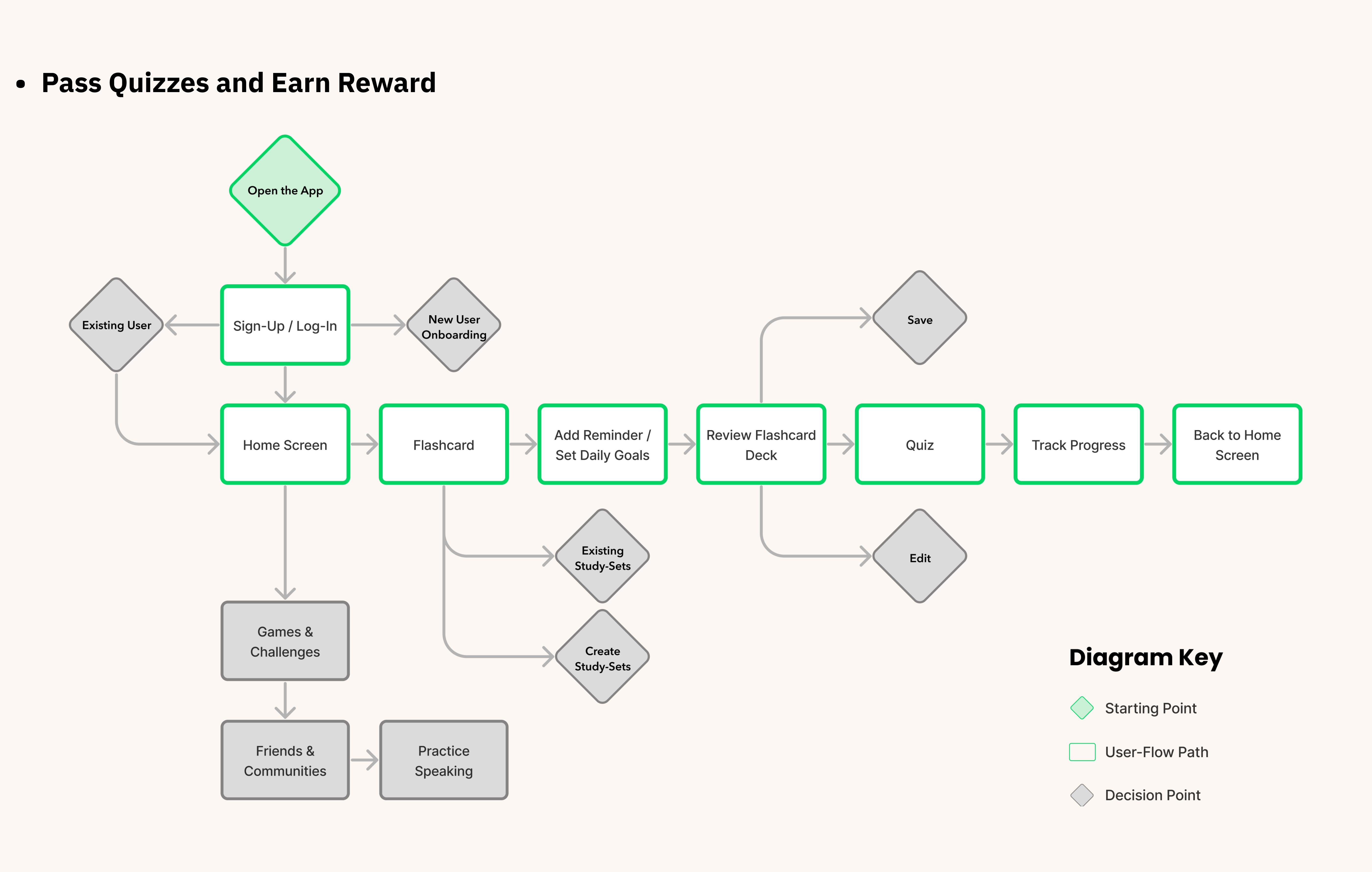
User Flows
I mapped out user flows by utilizing the user persona and her corresponding goals
04. Design
Wireframes
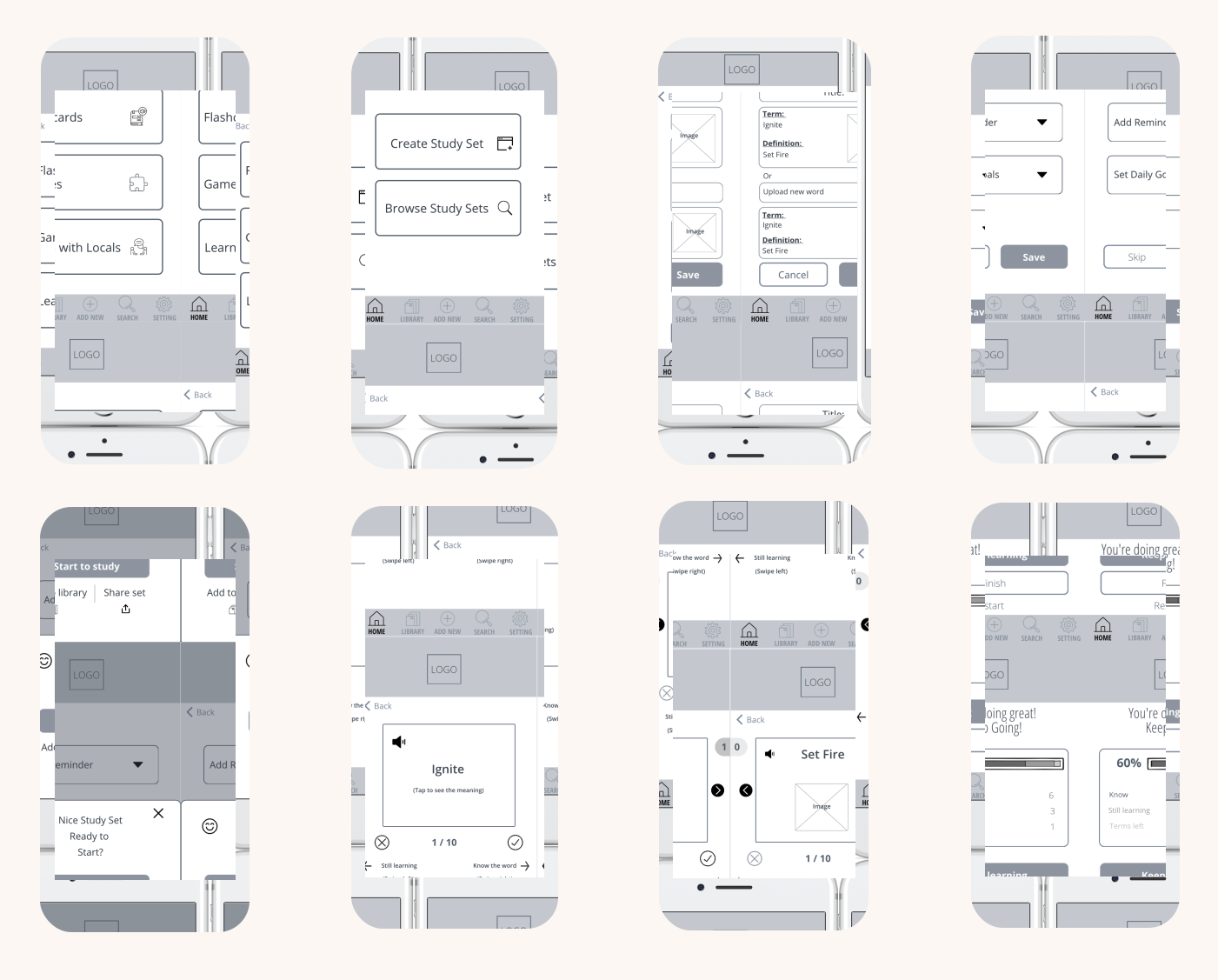
At this stage, I started to sketch out low and mid-fidelity wireframes, and focusing on usability in different screens to ensure that the final design will be intuitive and user-friendly
.jpg)
05. Test
Usability Testing
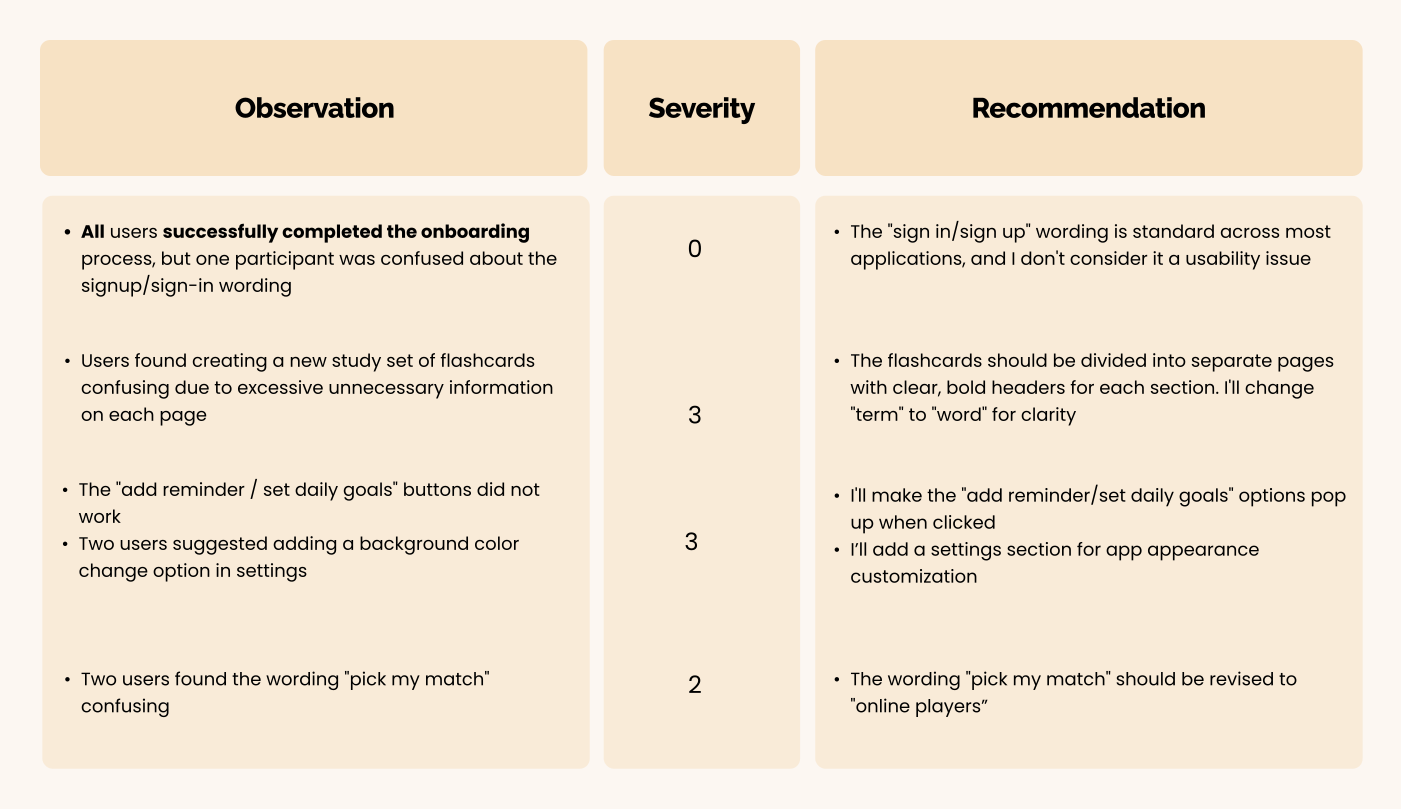
I conducted usability testing on the mid-fidelity wireframes with four potential users. Subsequently, I categorized their feedback using Jakob Nielsen’s Error Severity Scale to identify and prioritize usability issues effectively
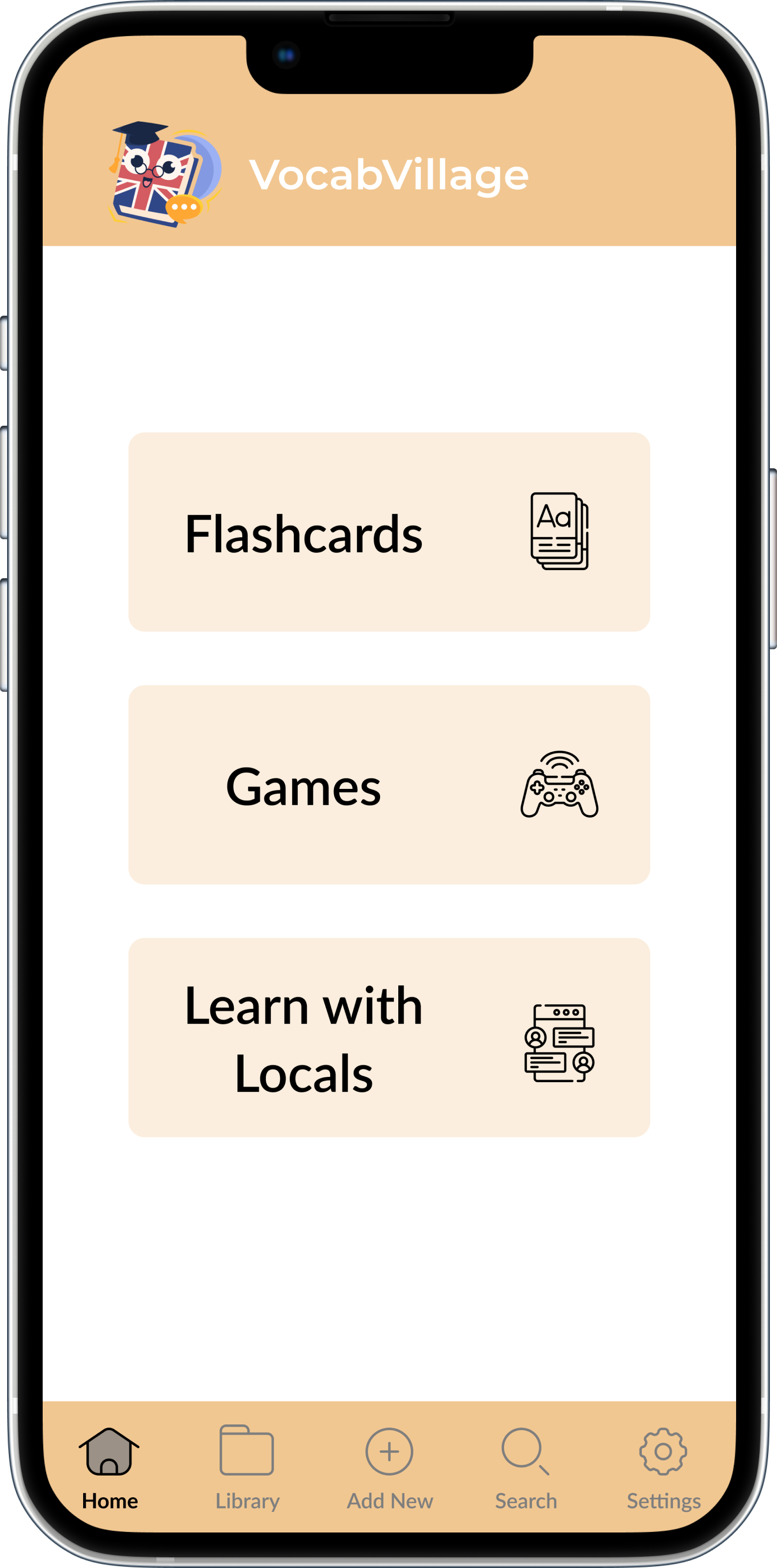
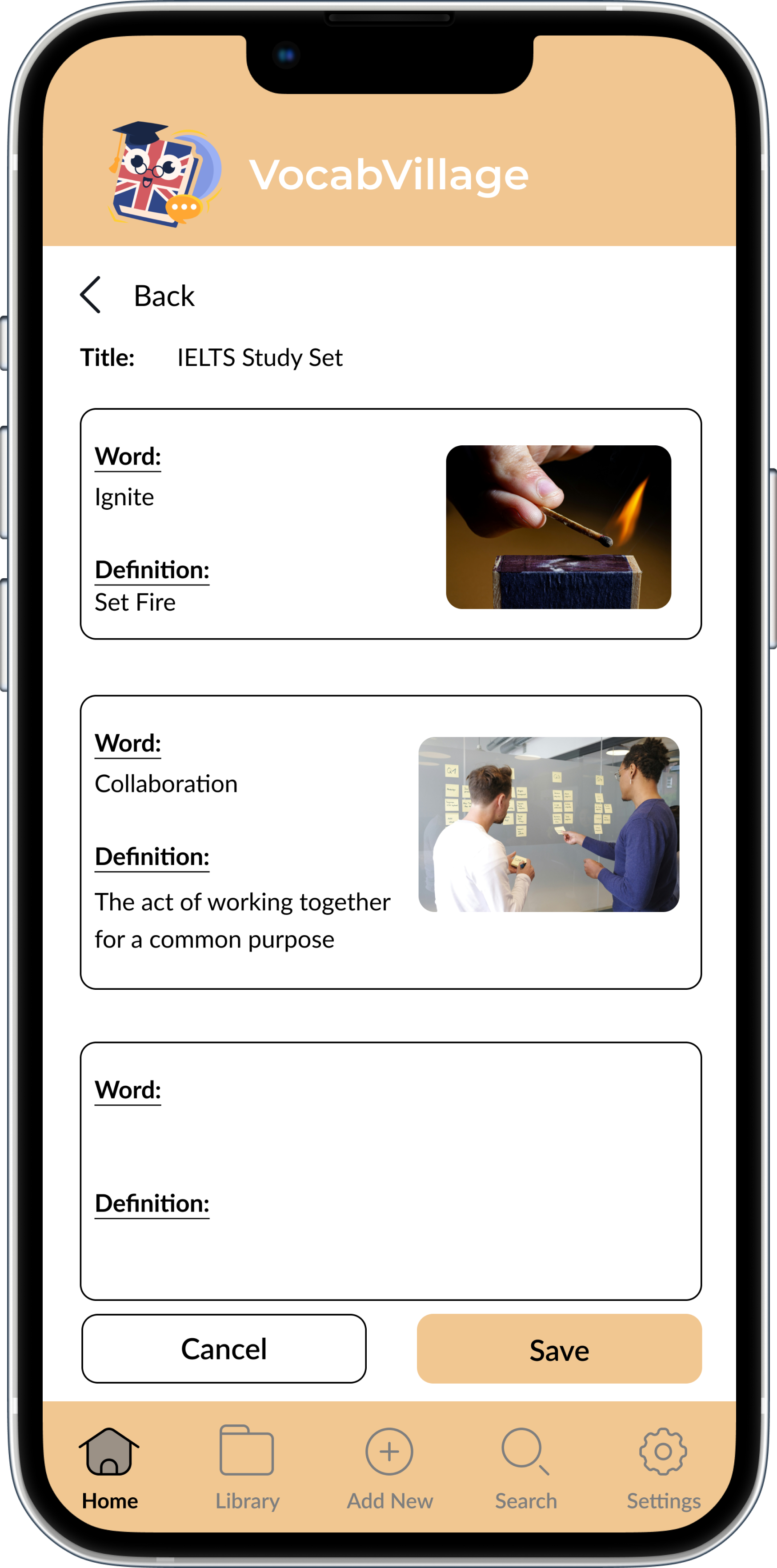
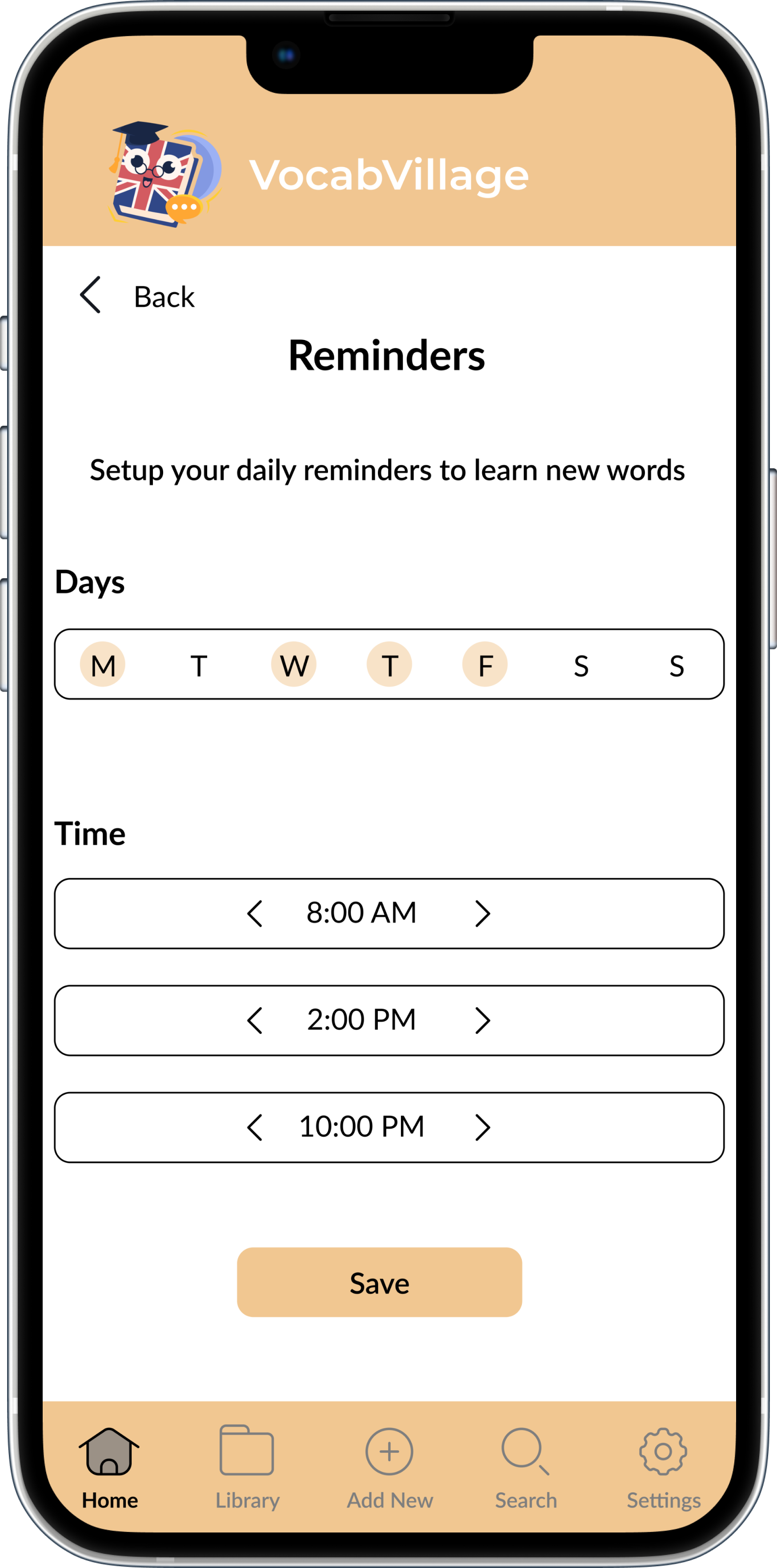
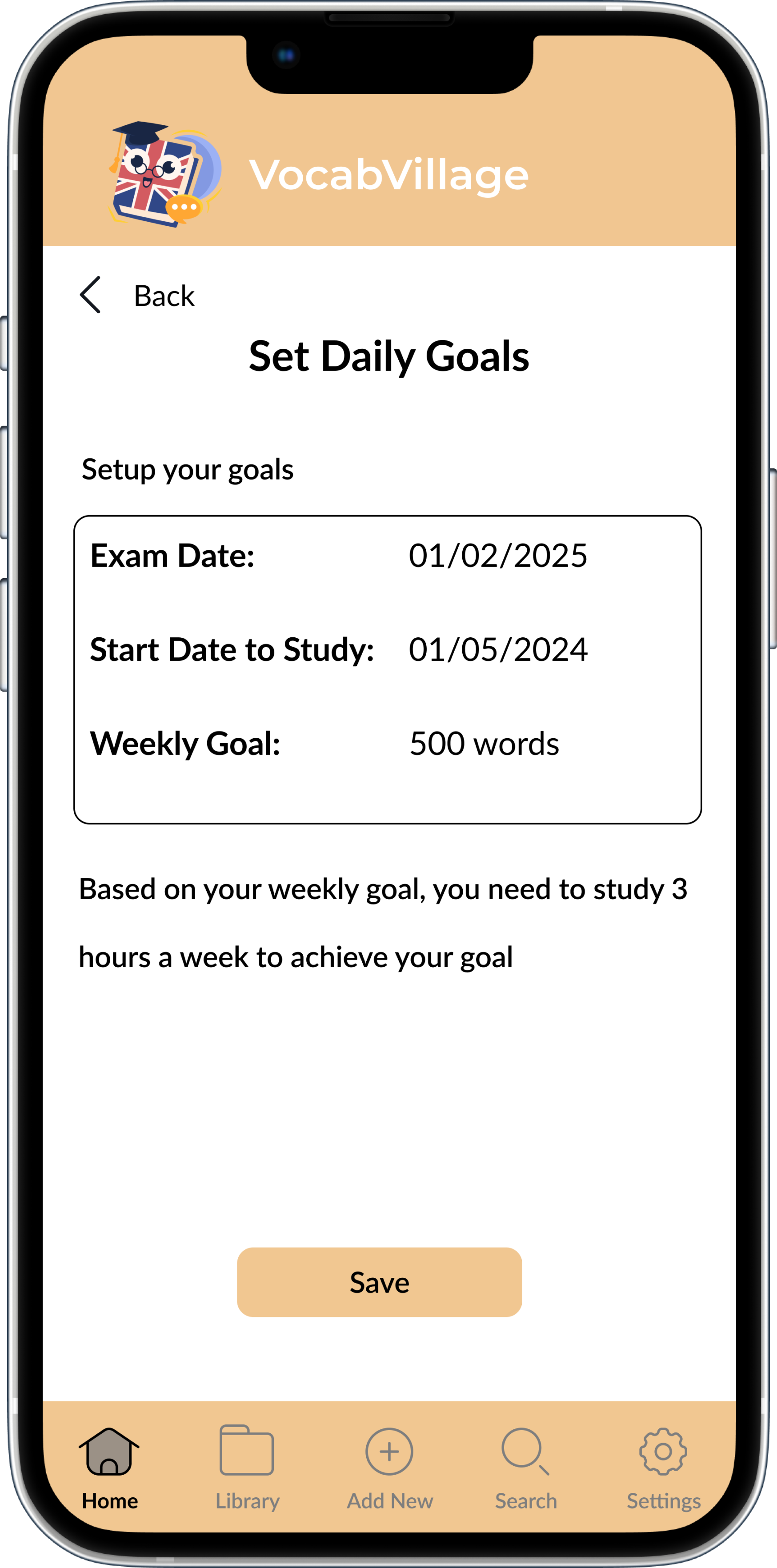
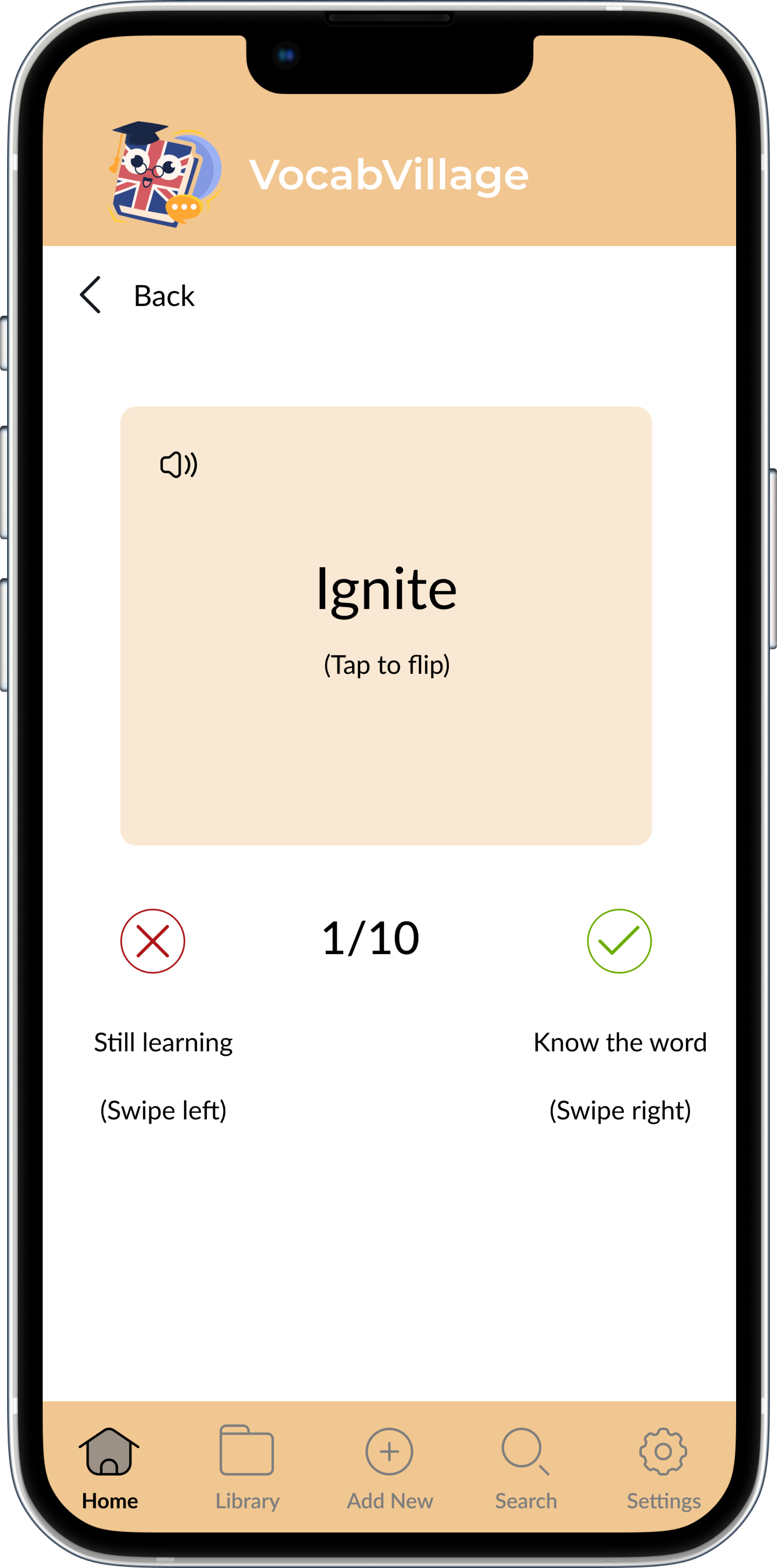
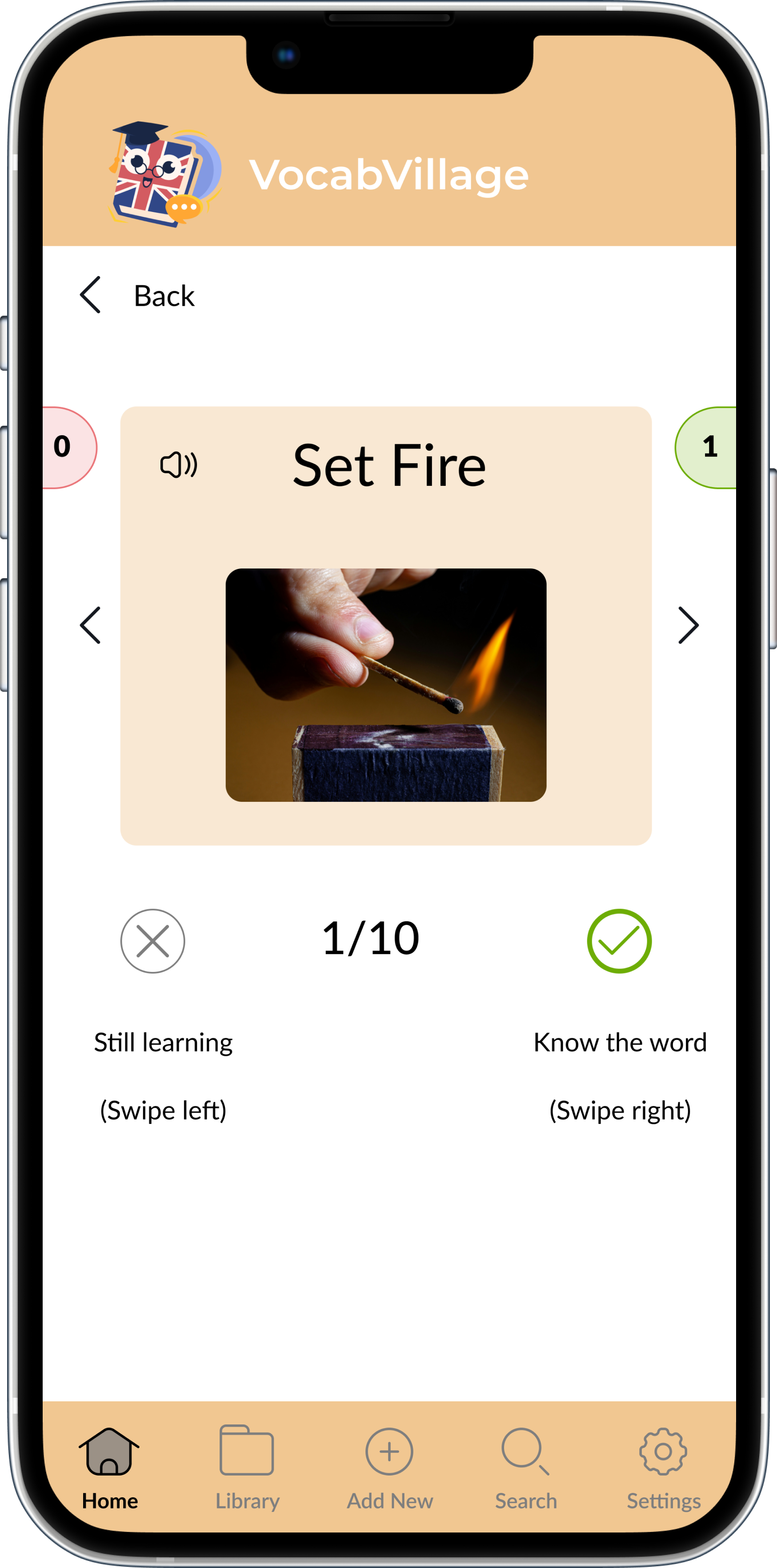
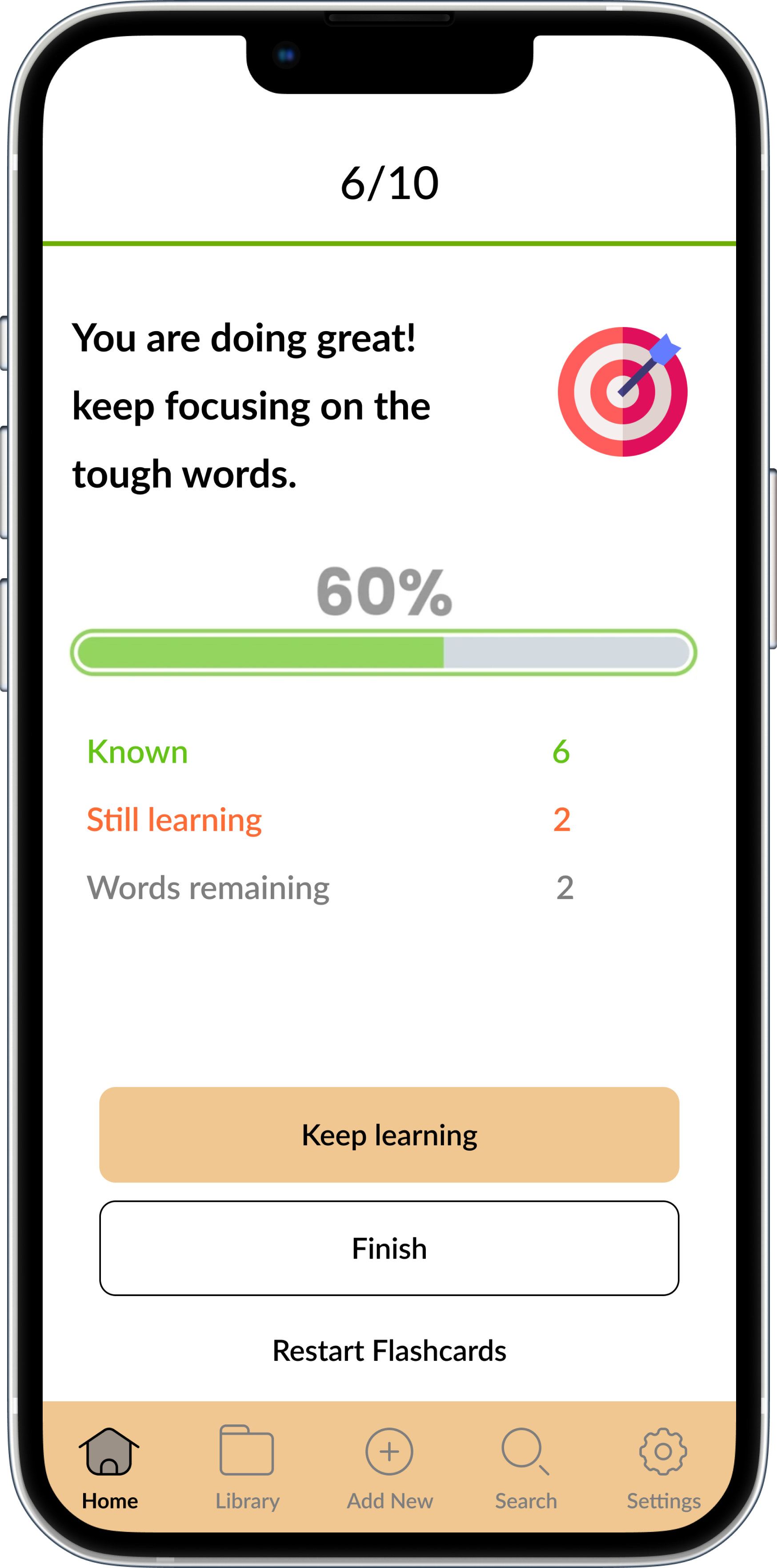
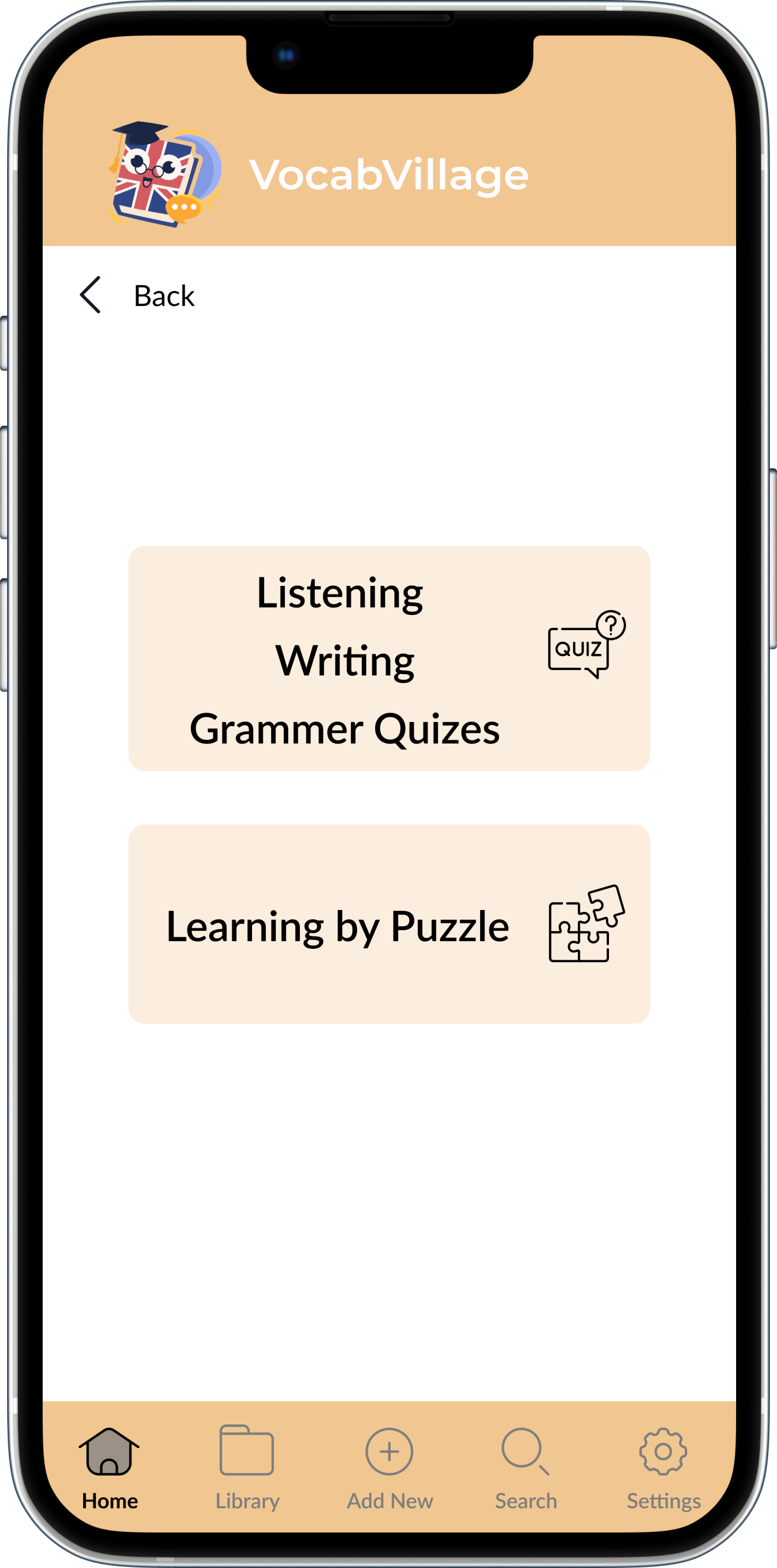
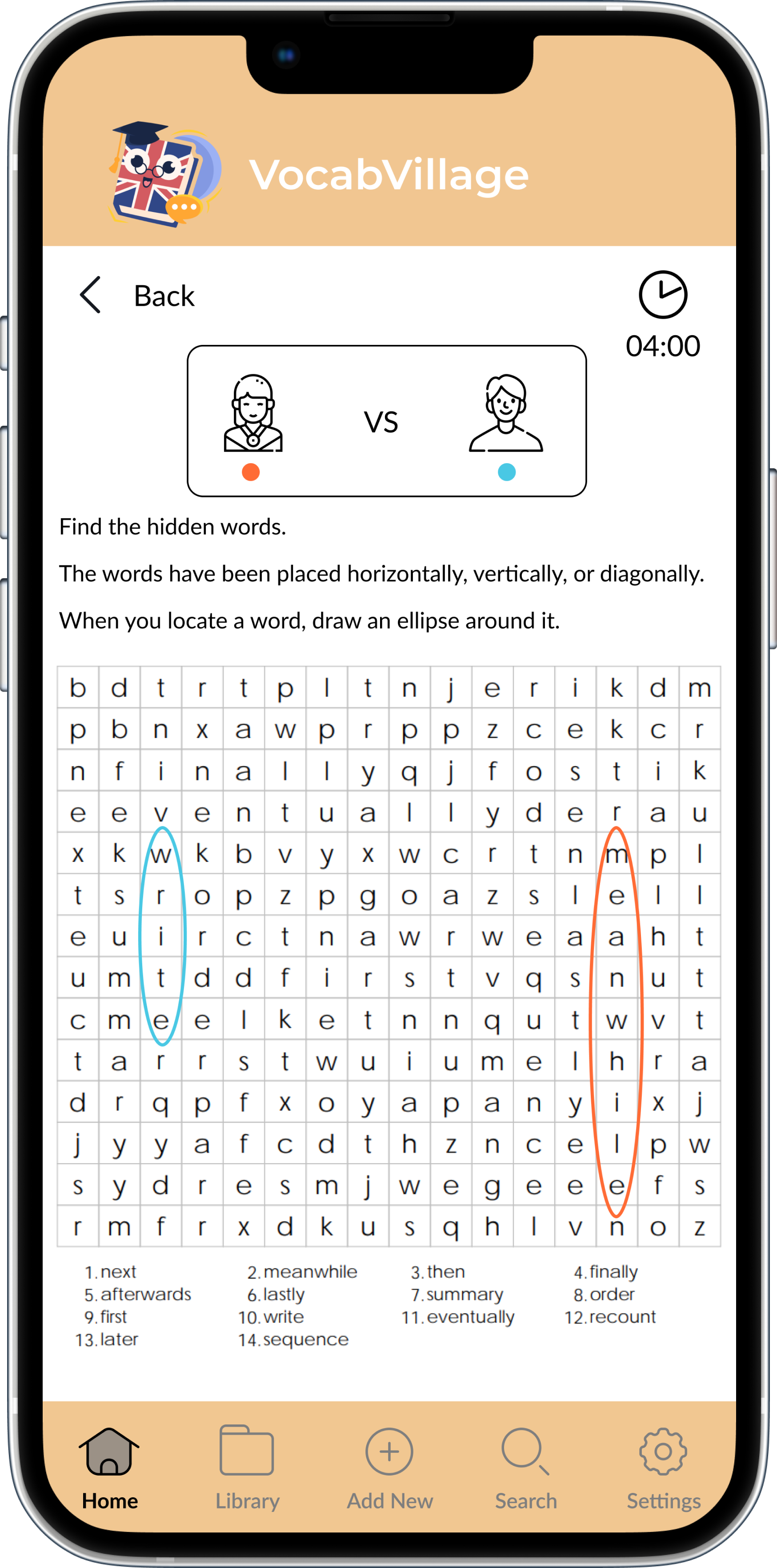
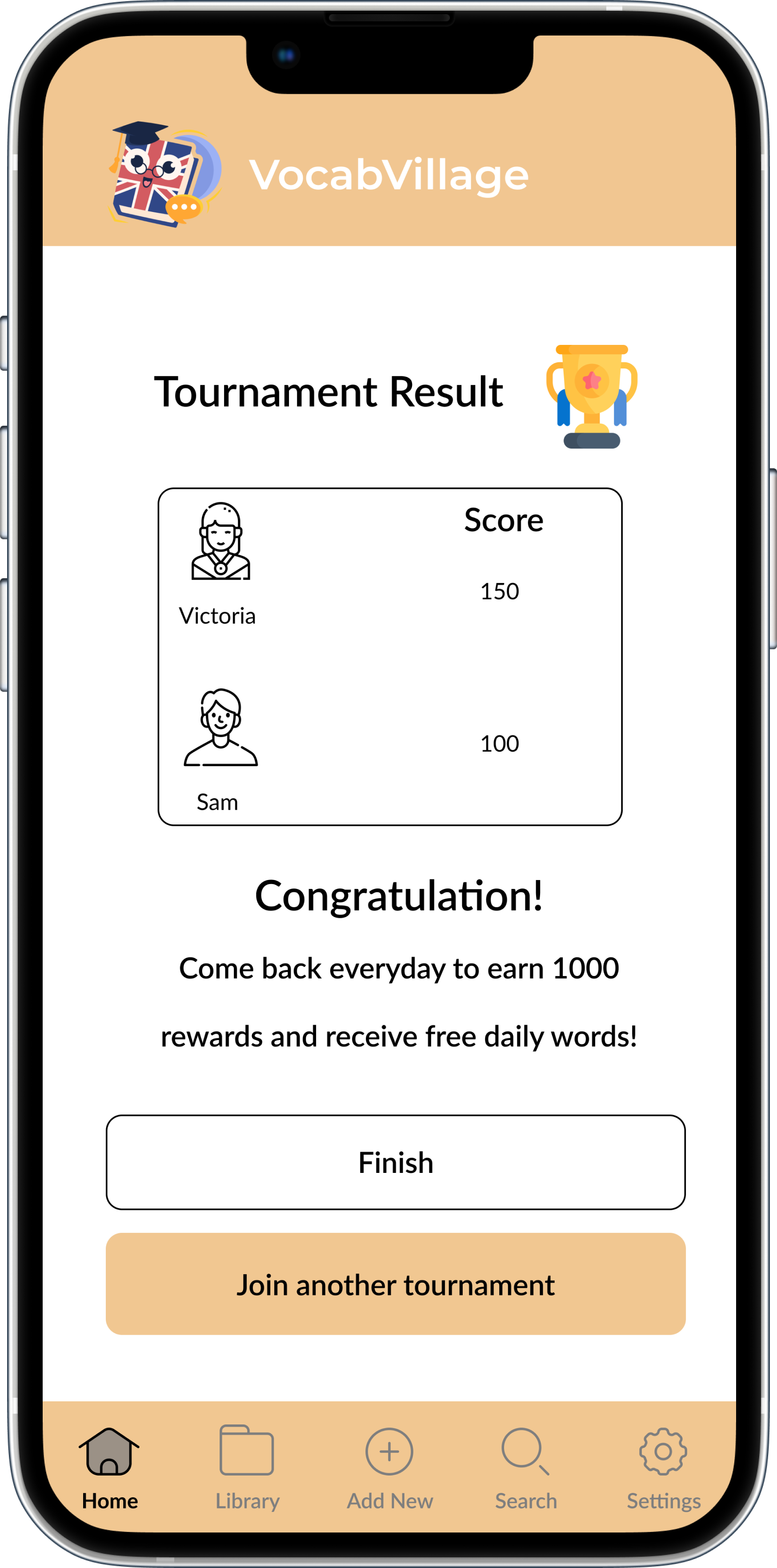
Final Mockups
Next Steps
- Share the prototype with a wider audience of target users to gather more feedback
- Enhance user experience by incorporating additional buttons or using different colors for different features
- Compare with other apps to identify alternative features that could better address the needs of our target personas
Key Takeaways
- Embrace imperfection as a natural part of the design process
- Usability testing presents valuable opportunities for improvement
- Exploring different prototype tools enhances the learning experience
- Conducting interviews with users from diverse backgrounds is essential for understanding what, why, and how to design effectively
The Prototype

